Japandi · Bathroom
Japandi Bathroom Ideas
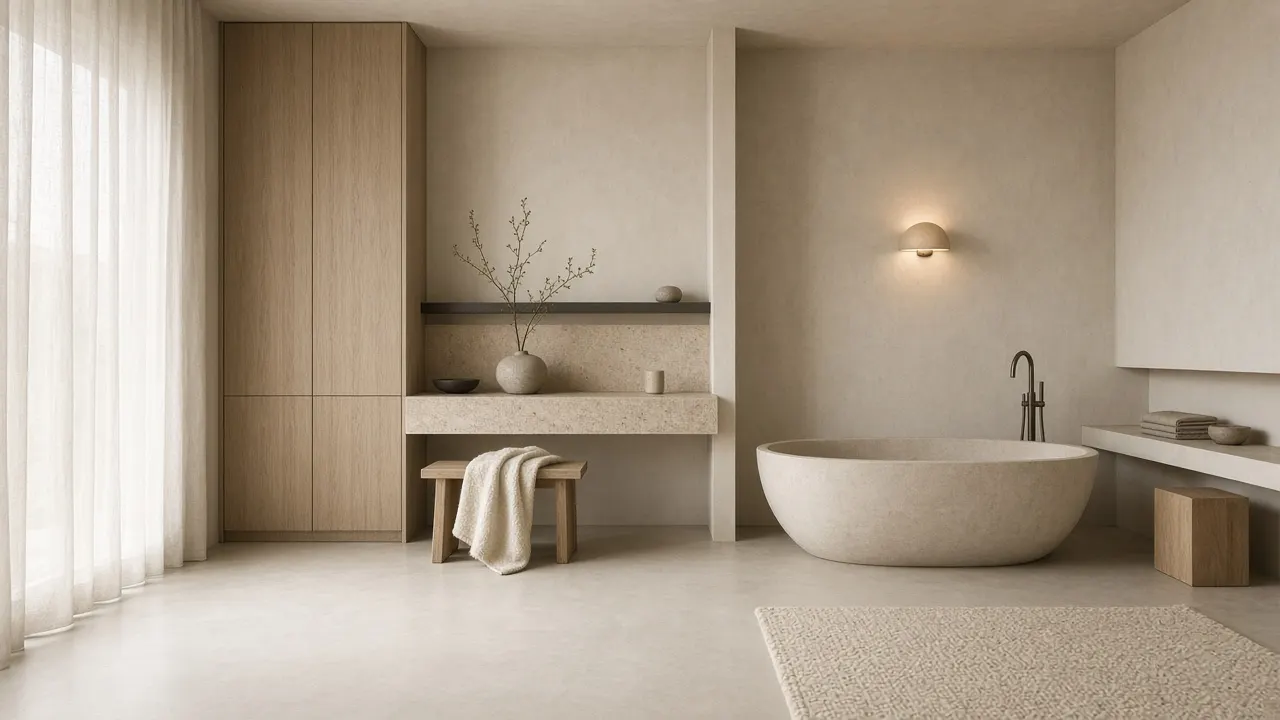
A bathroom is small, so the basin, the light and one material do almost all of the style. In a Japandi bathroom, that means the materials and the lamp before any extra object. The bathroom is the spa reading of the same materials: oak, stone, linen and a quiet tap. Houzz noted spa and wellness searches rising in its own 2026 data. That is a reason this room is here, not a claim about your street. The longer version of a neighbouring room is the Japandi bedroom.


- Warm white#F2EDE4
- Pale oak#D8C3A5
- Oat linen#B9A88F
- Moss#6B705C
- Ink#2B2B2B
How to get the look
Layout
The door swing has to clear the basin. Put the light at the mirror, and one quieter source if there is room. One material — stone, oak, or tile — covers the largest surface. The sample plan is a small room drawn in centimetres, not a survey. Walk the room once before you buy. If the path from the door is blocked by the first piece, the piece is too big or too far forward. The Japandi hub covers the style across rooms, and the bathroom hub shows the other published versions of this space. Buy the seat and the closed storage before the lantern. Japandi fails in the shop, where low benches are styled with five objects and a red cushion. At home the cushion goes, the objects go behind the door, and the wood stays pale oak or ash. If a piece is glossy, leave it. If it needs a story about Japan printed on a label, leave it. The working palette is a design choice for these pages: warm white, pale oak, oat linen, moss and ink. It is not a paint brand's official set. Use it to stop yourself adding a sixth colour. Mix in a mid-century piece only if the wood agrees and you do not add that style's mustard or teal as well. People still ask whether the sofa can be comfortable. It can, if the seat is deep. The frame stays low either way. In the bathroom, one finish has to be the main event because the room is small. A tap, a basin and a light at the mirror will be what you see every morning. The sample plan is a short room with a door swing that must clear the basin. Measure that before you fall for a wider vanity. Towels in linen or a plain weave are the textile. The shop cards below are placeholders for those roles. They do not link to a retailer. Water and steam decide the materials. Anything that stains, peels or needs a speech to explain will lose. Choose the surface you touch — the basin, the tap, the towel — and let the rest be quiet. The detail photographs are there for the finish and the light at the mirror, not for a count of bottles. Bottles go in the cabinet. A small room shows every extra object, so the edit is stricter here than in the living room. If you are also doing the bedroom, keep the metal and the textile in the same family so the short walk between them feels deliberate. Measure the door swing against the vanity before the vanity is in the room.
Materials
Pale oak or ash, linen, wool, paper, rattan, jute, stone and matte ceramic are the materials that carry Japandi. Keep the list short. A linen sofa, an oak table and a jute rug already give you the warm-white, oat and moss range of the working palette (#F2EDE4, #D8C3A5, #B9A88F, #6B705C, #2B2B2B). Ink-black is an accent, not a second scheme. Shiny lacquer, red accents and a shelf of small objects fight the empty floor the look depends on. Closed storage matters more than another decorative surface: a slatted sideboard hides the things you use every day so the room can stay quiet.
Lighting
Late-morning light, softened, is the model. One practical lamp at a warm colour temperature does more than a grid of downlights. A washi or paper lantern is the usual practical: generic paper, not a branded design. Overhead downlights are the mistake that gets named most clearly. They are described as making the room feel like a conference room. Put the light at seated height, leave the ceiling plain, and let the window do the daytime work.
Five pieces that do the work
1. Oak vanity
One oak or ash vanity, low, with a door. The bottles live inside. The top stays almost empty, which is the same rule as the living room, applied to a smaller wet room.
2. Linen bath towel
Linen or a plain weave, oat or warm white. It is the textile. A patterned set and a shiny trim are the objects this palette does not need.
3. Matte tap
A matte tap in a dark metal or a quiet brass. Glossy chrome and a gold story-piece fight the matte ceramic and the pale wood. One finish, then stop.
4. Matte ceramic table lamp
A small lamp or a shaded light at the mirror, warm, if the room allows a lamp. The ceiling does not need a grid. Wet rooms still fail when the only light is cold and overhead.
5. Stone basin
One stone or matte ceramic basin. It is the object. The working palette's ink is the dark note in the tap or the shadow, not a second colour scheme on the wall.
Common mistakes
Downlights as the only light
A ceiling full of cool spots is the look people compare to a conference room. One warm practical lamp and the window are enough.
Filling every wall
Japandi leaves floor and wall empty on purpose. If every corner has a plant or a shelf, you have decorated past the style.
Clutter instead of closed storage
Open display of everyday things undoes the empty space. Put them behind the sideboard door.
Frequently asked questions
Is Japandi still in style in 2026?
In this bathroom: People are still asking that in 2026. The useful version is not a trend costume. It is low furniture, pale wood, natural cloth and storage that closes. That combination does not depend on a single year's colour.
Can you mix Japandi and mid-century modern?
In this bathroom: Yes, if you keep one wood family and one accent. A tapered walnut piece can sit with a low linen sofa. Stop before you add a second strong colour. The mix fails when every chair is a different decade.
Can a Japandi sofa still be comfortable?
In this bathroom: That is a real question from a 2026 advice thread. Comfort comes from seat depth and a textile you want to touch, not from raising the frame. Keep the sofa low and the cushion generous.
Related ideas
More Japandi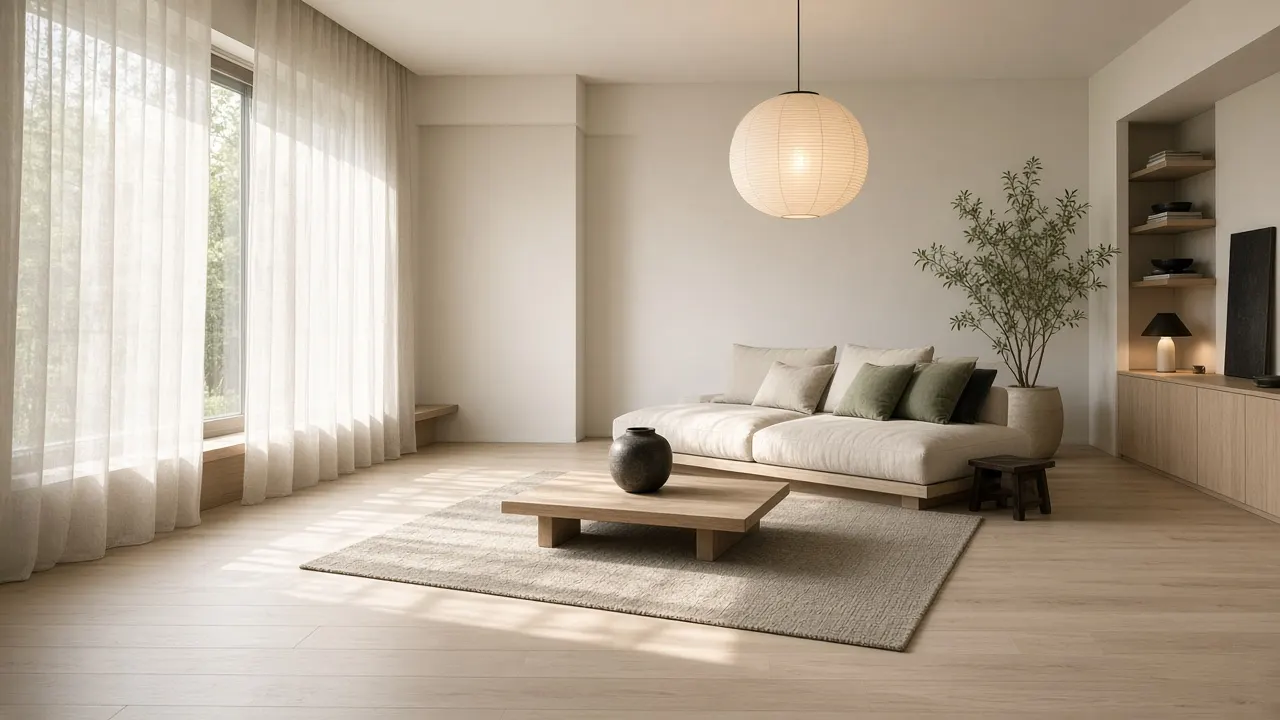
Japandi Living Room Ideas
Japanese restraint with Scandinavian warmth.
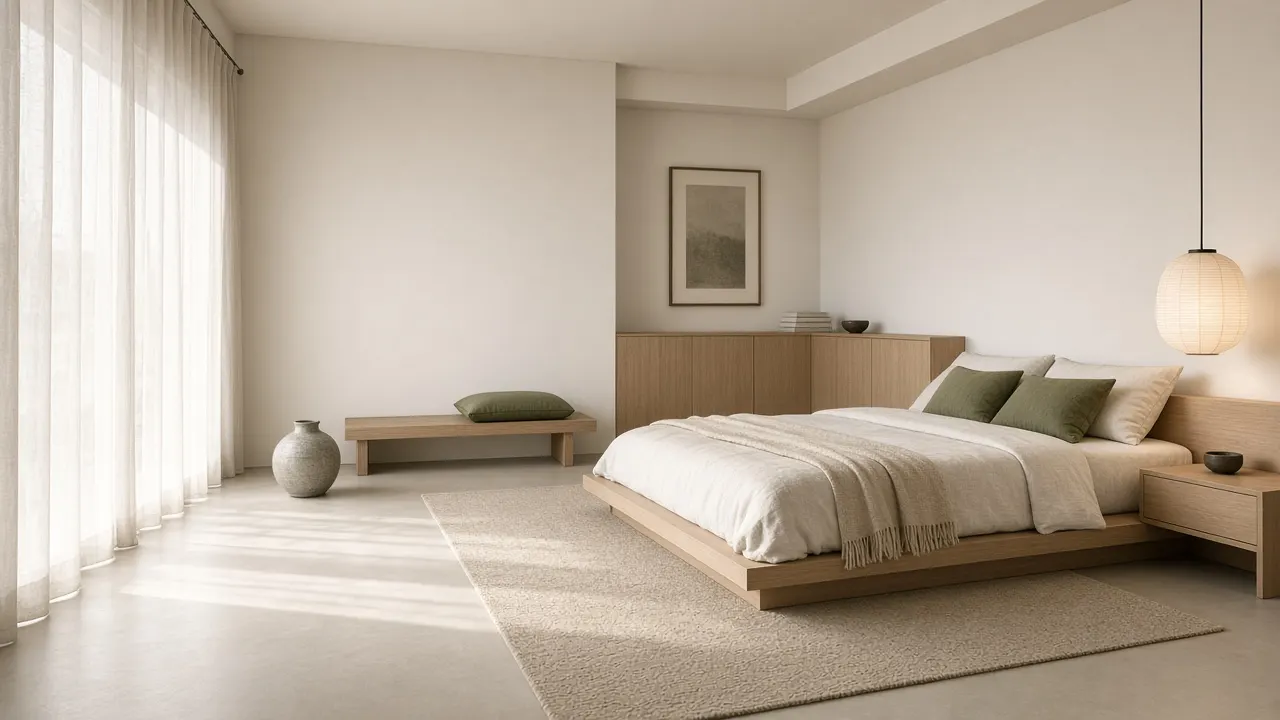
Japandi Bedroom Ideas
Japanese restraint with Scandinavian warmth.
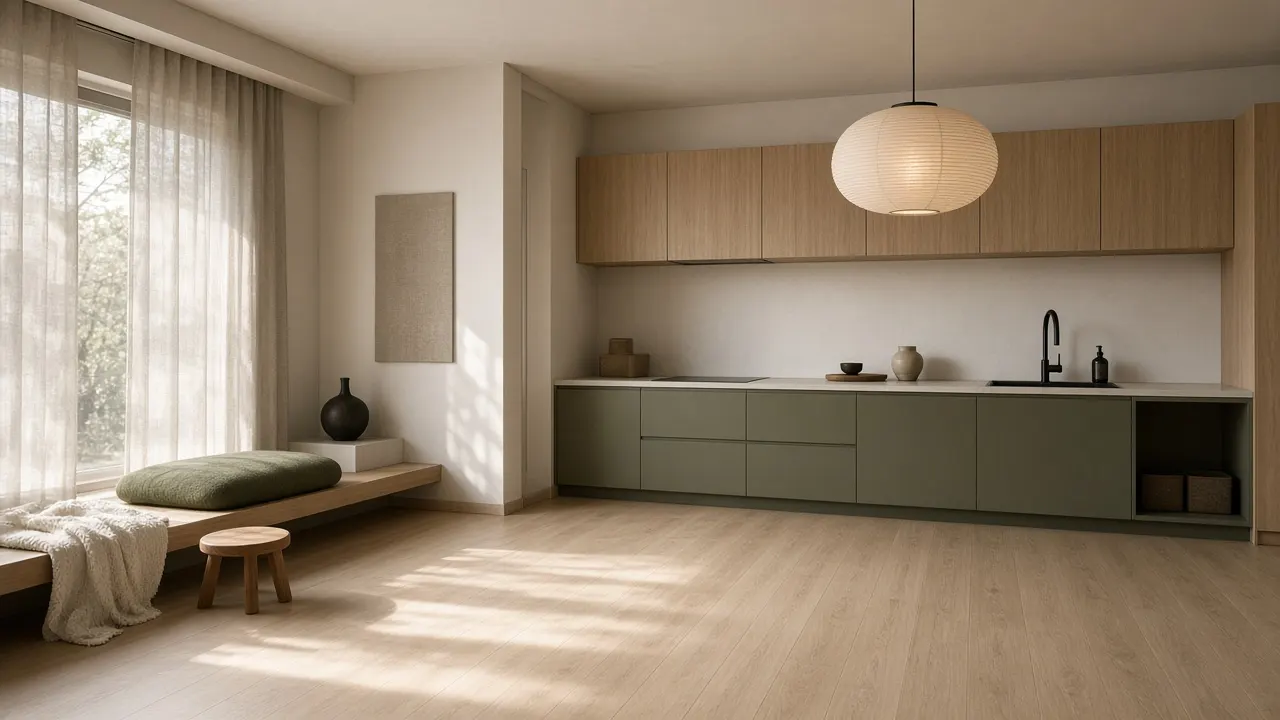
Japandi Kitchen Ideas
Japanese restraint with Scandinavian warmth.
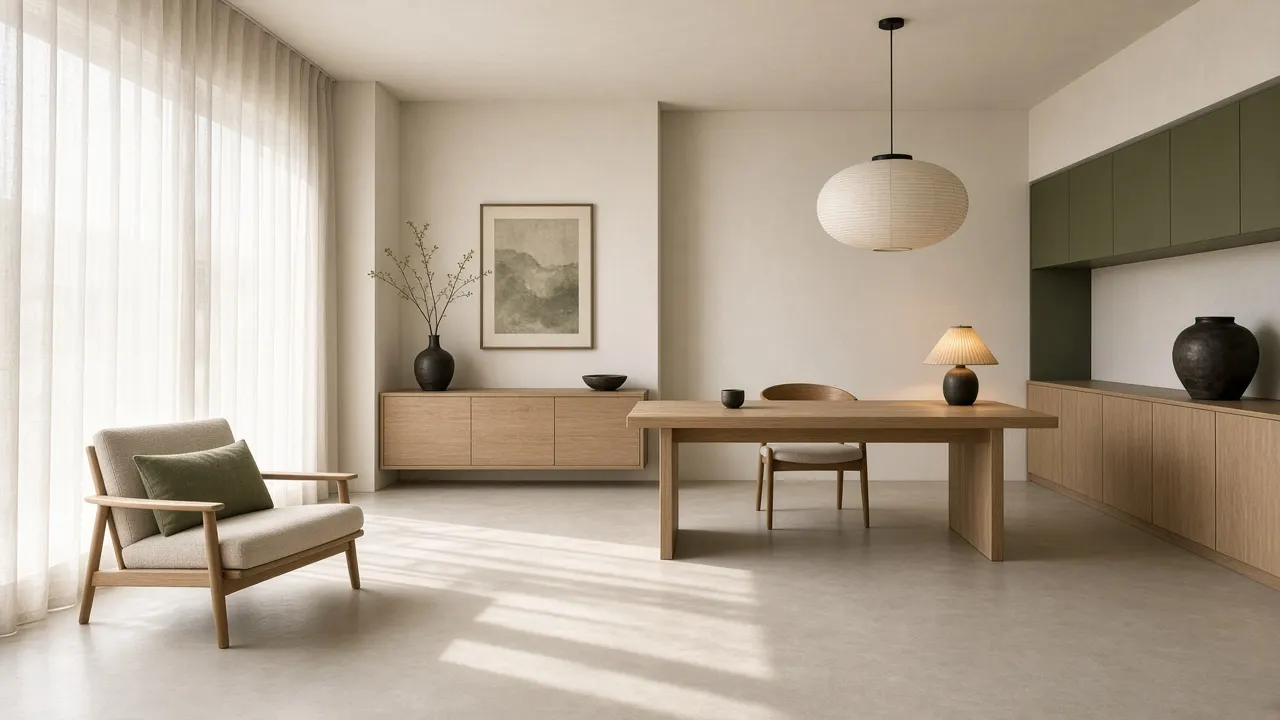
Japandi Home Office Ideas
Japanese restraint with Scandinavian warmth.
Minimalist Bathroom Ideas
Few pieces, a neutral palette, and room to breathe.